
Automotive Rollover Testing & Steer-Induced Crash Simulation for Occupant Safety
May 12, 2026

The Insurance Institute for Highway Safety (IIHS) reported 28% of all passenger vehicle occupant deaths involved a vehicle rollover, and a vehicle rolled over in 47% of fatal single-vehicle crashes in 2023 (IIHS Fatality Facts 2023). Continued focus on vehicle dynamics and occupant safety aims to further decrease injuries and fatalities resulting from vehicle rollovers. Complex vehicle motion associated with rollover events presents challenges for traditional vehicle testing environments.
MGA offers numerous rollover modes to help replicate a wide range of rollover scenarios, assisting manufacturers with studying occupant safety, developing more robust airbag calibrations, improving identification of a rollover event, and minimizing unnecessary deployments. These modes can include, but are not limited to:
- Ramp Rollover
- Soil Rollover
- Curb Rollover
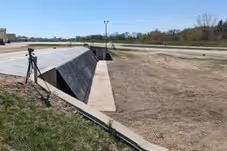
- Ditch Rollover
- Robotic Steer-Induced Rollover
- Rollover Immunity
- Russian GLONASS rollover
- FMVSS 208 Dolly Rollover / SAE J2114 Roll
Watch this video for an in-depth look into steer-induced rollover testing at MGA.
Understanding Different Rollover Conditions
Rollover conditions can be broken up into two main categories: longitudinal movement-induced, and lateral movement-induced.
Longitudinal movement-induced rollovers are typically caused by uneven terrain, such as ditches, embankments, or ramps encountered by the vehicle. These events can be recreated with the vehicle traveling in a straight line over an obstacle and can be conducted with a tow system.
Lateral movement-induced rollovers are more complicated to replicate, requiring the vehicle to either be towed laterally on a platform or skate, or through a steering input to produce lateral movement. Lateral movement rollovers can be described as one of two types: tripped or non-tripped.
Tripped rollovers occur when a vehicle experiences a loss of traction into an object such as a curb, soil, sand, or an increased friction surface. Non-tripped rollovers occur when lateral acceleration induces a rollover without an external object triggering the event.
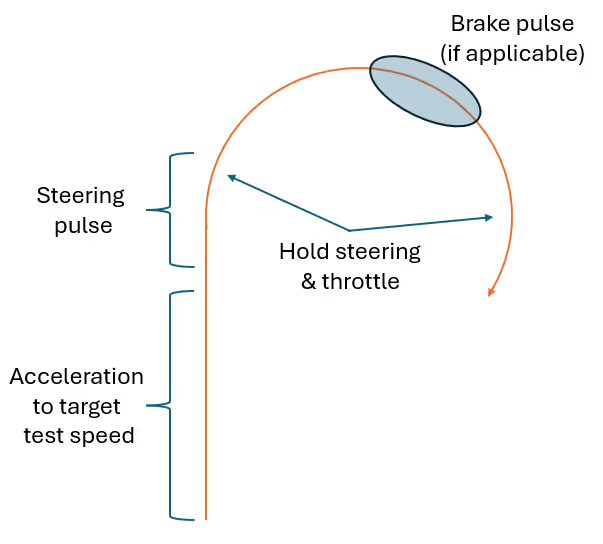
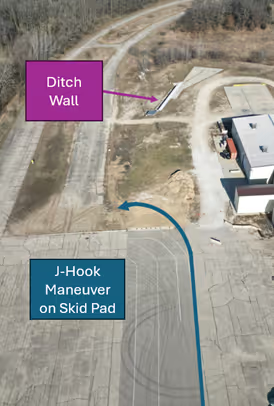
Steer-Induced Swerve Scenarios
Predictable and repeatable rollover testing allows manufacturers to define vehicle roll conditions more effectively. Typically, a skilled test driver is required to produce consistent dynamic rollover events but can only safely approach a near vehicle rollover but not perform a full rollover. Using a remotely controlled automated steering robot, MGA can perform dynamic rollover testing consistently with a system capable of withstanding vehicle impacts.
MGA’s steer-induced rollover creates a dynamic swerve scenario representative of rollover immunity testing. This assessment is conducted without a live occupant, ensuring safety while accurately simulating real-world vehicle response conditions and dynamics. No-roll scenarios are the only mode safely achieved by a test driver.
Roll Types
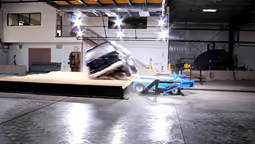
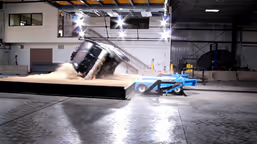
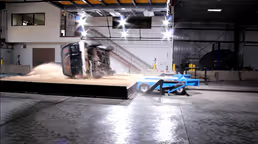
No-roll is defined as a lateral movement event where the vehicle does roll onto 2 wheels but does not approach the tipping threshold. A near-roll approaches the tipping threshold, allowing the vehicle to sit near or at the tipping threshold for some time, but then comes back down onto 4 wheels. A roll scenario requires the vehicle to rotate to at least its side or further onto the roof. This allows manufacturers more insight into the vehicle’s rollover conditions, further improving air bag control unit (ACU) calibration.
A Look Inside The Steering Robot
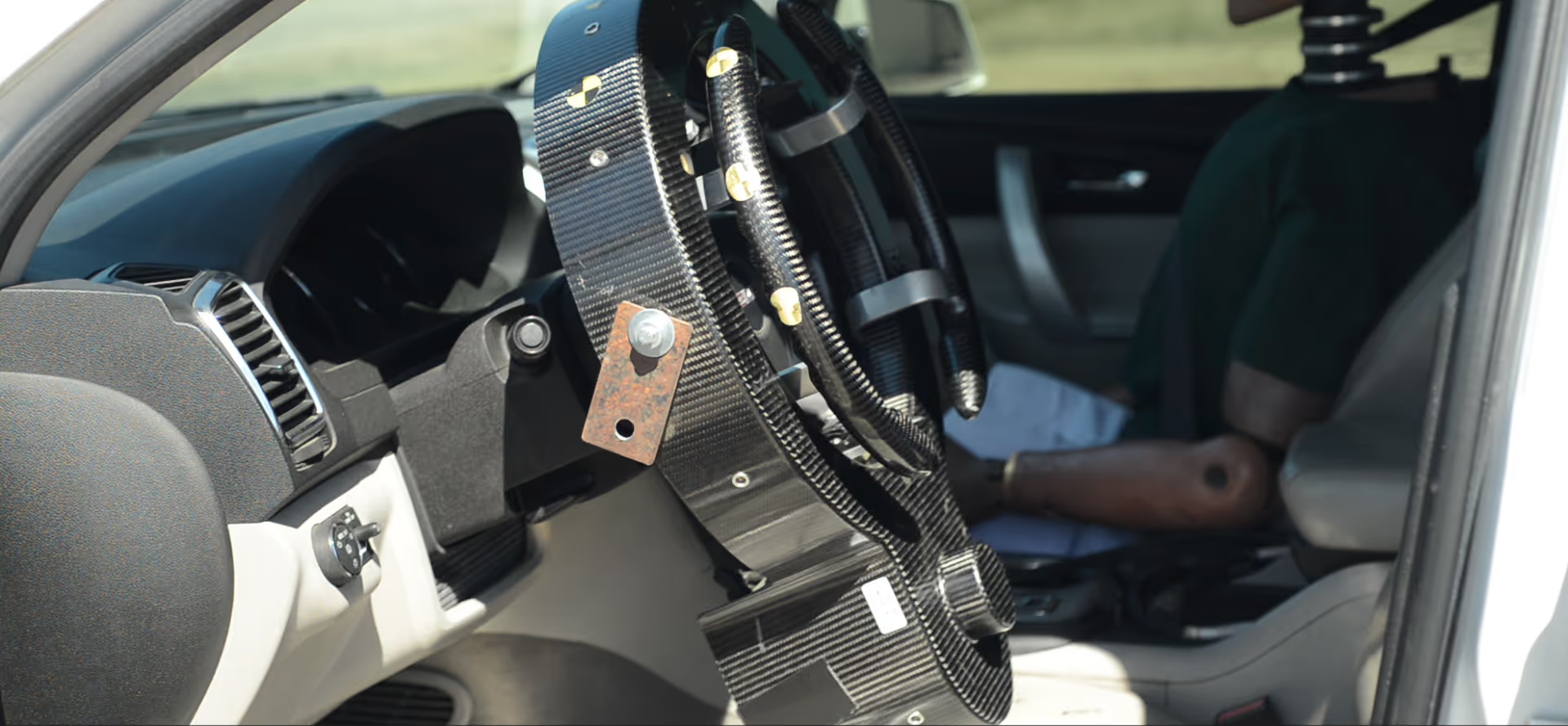
The steering robot hardware, consisting of an Automated Test Driver System and Oxford RT4002 GPS, can survive up to a 35mph frontal impact as well as rollover events. The steering robot can perform repeatable swerve maneuvers more consistently than a human driver through highly customizable control profiles. These movements contrast the less dynamic soil and curb tests with platforms in which the vehicle can only be tested at a strict 90 degrees. With the steering robot hardware, rolls can be completed at multitudes of angles and scenarios. The control profiles are executed by defined steering and pedal inputs based on GPS data. Written commands can modulate acceleration, speed, turn angle, and the rate of change of the turn angle. The GPS also allows travel paths to be recorded throughout testing.
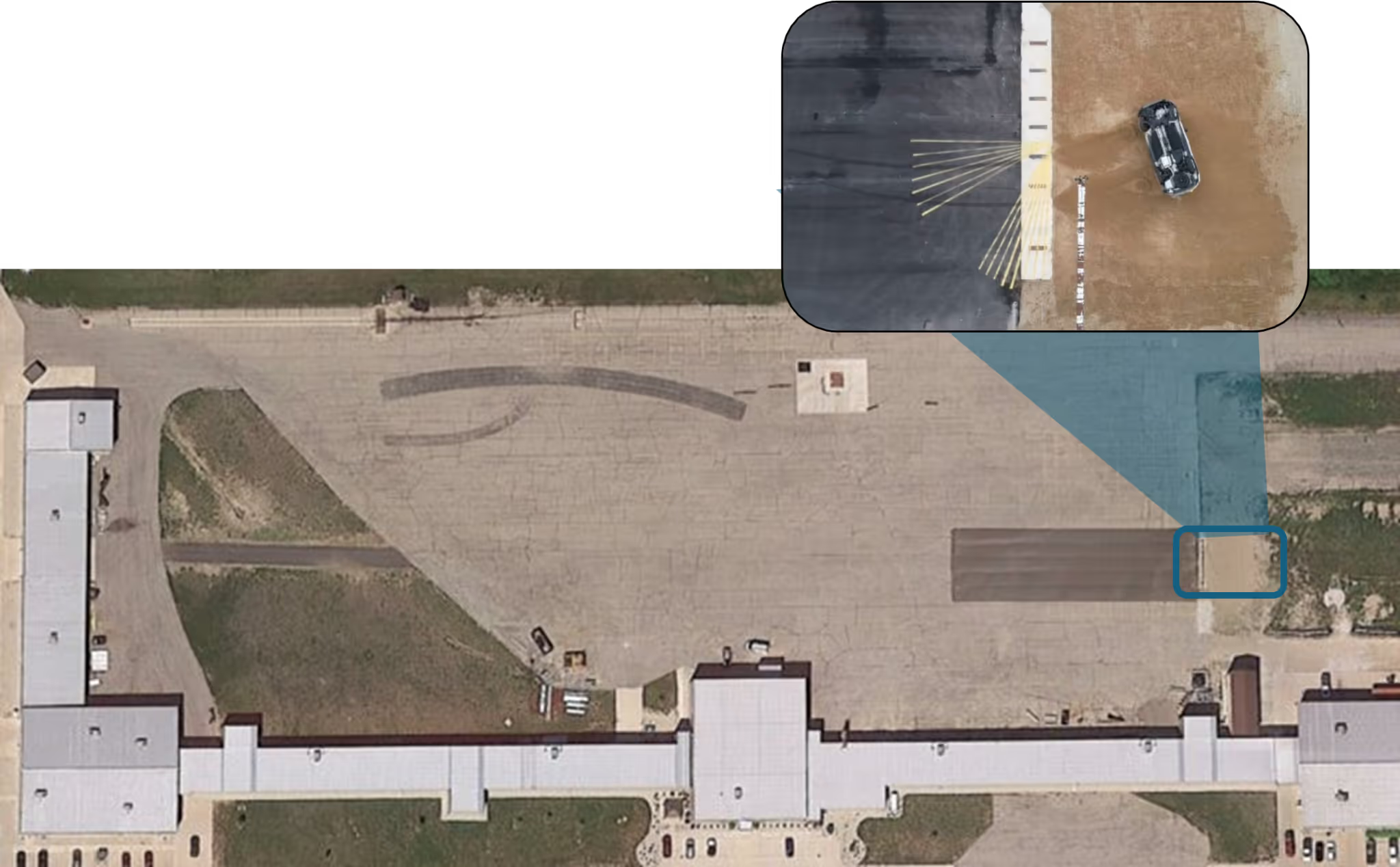
When combined with MGA’s 400-acre Wisconsin test facility, the steering robot can adapt to a wide envelope of rollover testing. Our 4-acre skid pad allows for quick lane changes and J-hook type testing. The skid pad is bordered by a 50’ x 50’ sand trap as well as 90mm, 130mm, 150mm, and 200mm curb heights, which, when combined with a J hook maneuver, allow for tripped rollover events. The steering robot can also be combined with over 50 surfaces throughout the facility to create unique test modes.
Instrumentation for Steer-Induced Rollover Testing
Instrumentation for this type of test is fully customizable. Commonly used instrumentation includes accelerometers and angular rate sensors located in or on the vehicle. This allows the vehicle’s internal sensing system to also be monitored.
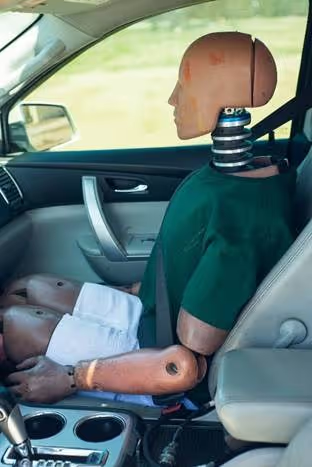
MGA offers a variety of video recording options, including real-time video located on and off the vehicle. These videos can be used to track the dummy movement throughout the duration of the event. Overhead and aerial footage is also available with drones and camera booms.
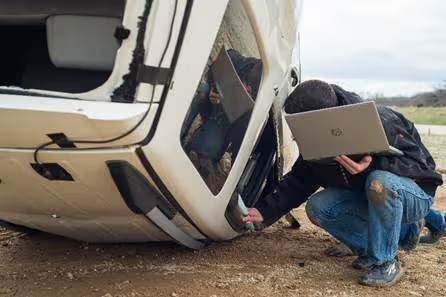
Using a steering robot, complex steer-induced rollover tests can precisely replicate real-world scenarios. With over 30 years of rollover experience, MGA offers detailed data collection and a comprehensive suite of video recording options to fully capture rollover events. When combined with MGA’s versatile facility, industry professionals can gain insight into complex rollover events, helping to further mature ACU calibrations and continue studying occupant airbag interactions, all while improving overall occupant safety.
If you have rollover testing needs, reach out to us at www.mgaresearch.com/contact. For more information, visit https://www.mgaresearch.com/capabilities/rollover-and-sensor-development.
Ready to Get Started?
Let's discuss your testing needs and how MGA can help. Our team is ready to provide the expertise and solutions you're looking for.