
FMVSS 208 Updates: What’s Next for Vehicle Safety
Feb 3, 2026
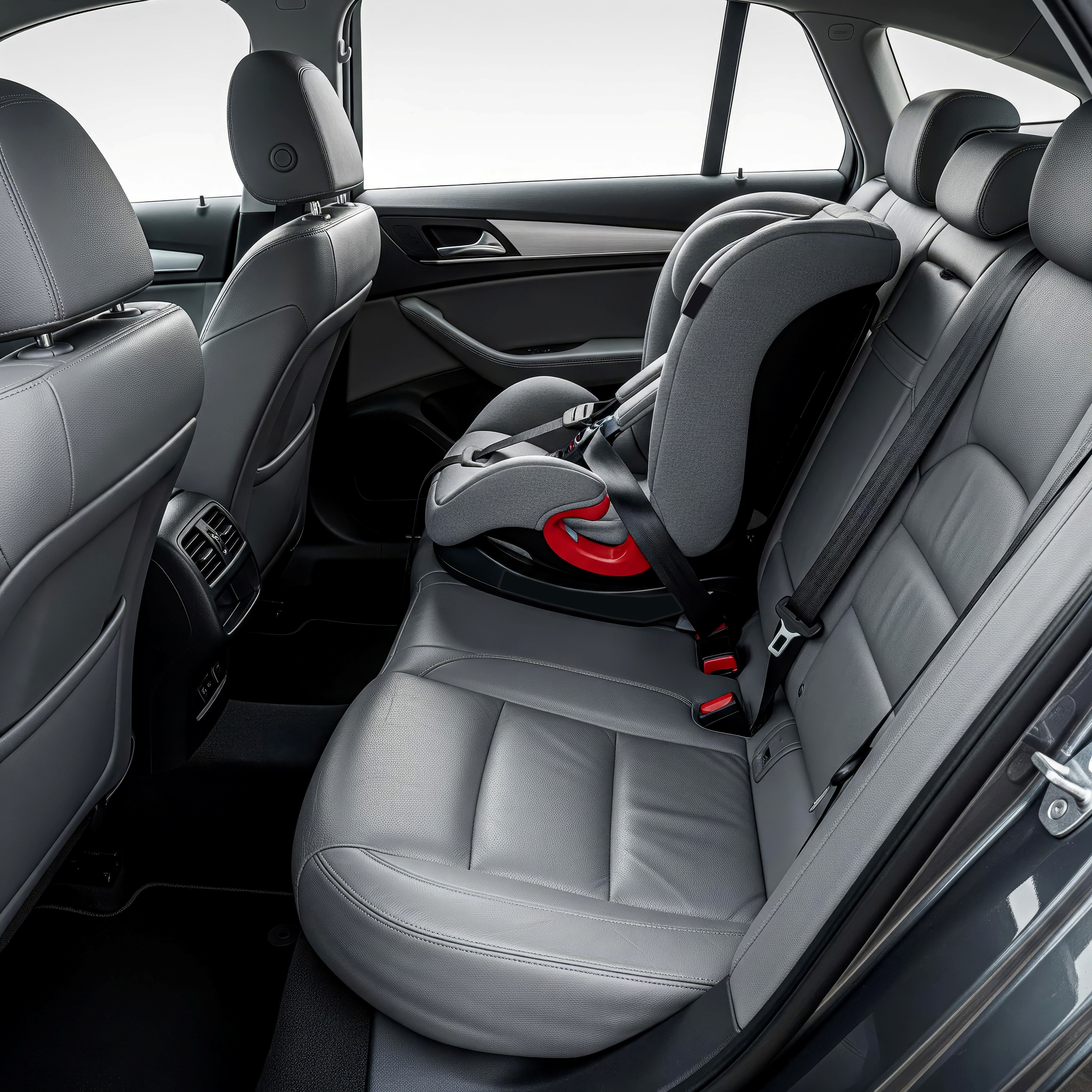
FMVSS 208 plays a critical role in vehicle safety, and its latest updates bring important changes for manufacturers and suppliers. In this article, we’ll cover the background of FMVSS 208, outline the new updates, including seat belt reminders and child restraint system (CRS) changes, discuss their impact on the industry, and explain how MGA can help you navigate these evolving requirements.
FMVSS 208 – Background
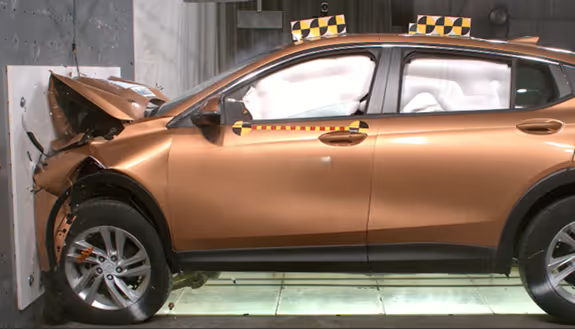
Federal Motor Vehicle Safety Standard (FMVSS) No. 208, Occupant Crash Protection, is one of the core safety standards the National Highway Traffic Safety Administration (NHTSA) established to reduce the number of deaths and the severity of injuries among vehicle occupants. It specifies vehicle crashworthiness requirements in terms of forces and accelerations measured on anthropomorphic test devices (ATDs) used to calculate estimated risks to various injuries in test crashes and sets equipment requirements for passive restraint systems. All automotive manufacturers are required to meet the FMVSS 208 standard as part of the NHTSA’s safety certification process.
Originally introduced in 1968 as a seat belt installation standard for passenger vehicles, FMVSS 208 evolved to include dynamic crash testing, with a final ruling in 1973 setting a limit of 30mph. This threshold was later increased to 35mph, reflecting a greater push for occupant protection. Subsequent revisions incorporated advanced restraint technologies, such as airbags and sensors, making FMVSS 208 a cornerstone regulation for improving crashworthiness and reducing injuries in frontal collisions.
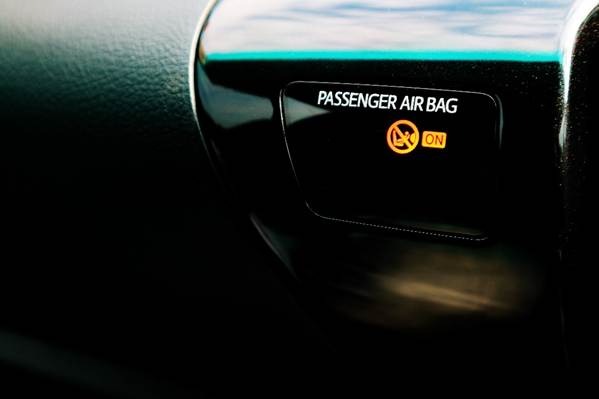
CRSs became an integral part of FMVSS 208 as the standard evolved to address the significant risks that early airbag designs posed to young children. While airbags are highly effective at protecting adult occupants, their force and deployment characteristics can be dangerous for children, whose body size, posture, and biomechanics differ substantially from adults, and who are typically seated in CRSs. As safety concerns grew, FMVSS 208 was revised to incorporate CRS based evaluations of front passenger seats, ensuring that advanced airbag systems could recognize when a child restraint was present and either suppress or modify deployment to reduce the risk of injury. This integration marked a major shift in occupant protection design, prioritizing systems that not only safeguard adults but also prevent airbags from causing additional harm to the youngest and most vulnerable passengers. When installing your own child's seat into your vehicle, it is important to remember to never put the CRS in the front seat of the vehicle.
FMVSS 208 Updates Overview
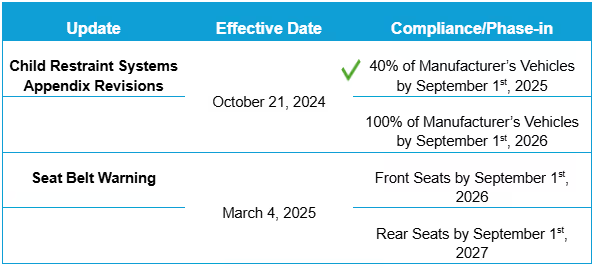
The recent updates to FMVSS 208 in the final rules released on October 21st, 2024, and January 3rd, 2025, introduce improvements to occupant protection, including enhanced seat belt reminder systems for the driver and front passenger, new rear seat belt warning requirements, and updated provisions for CRSs. These changes aim to reduce injuries and fatalities by strengthening safety measures across all seating positions and age groups. The table below provides a quick reference to the effective dates and phase-in timelines for these updates.
Table 1: FMVSS 208 Update Overview
Child Restraint System Appendix Revision
On October 21st, 2024, the updated Child Restraint Systems appendix list for advanced airbag testing took effect. This will improve child safety and help vehicles be better designed to accommodate the new child car seats being introduced into the industry every day. These updated seats were added due to previous CRS models being outdated and not widely used.
This table in Appendix A of CFR 571.208 applies to not less than 40% of a manufacturer’s vehicles manufactured on or after September 1, 2025, and before September 1, 2026 and 100% of a manufacturer’s vehicles manufactured on or after September 1st, 2026.
eCFR :: 49 CFR 571.208 -- Standard No. 208; Occupant crash protection. Appendix A
Seat Belt Warning System Expansion
The Final Rule will include enhancements to the current seat belt warning requirements for the driver’s seat belt extending to the front outside passenger and, for the first time, rear seat belt reminders.
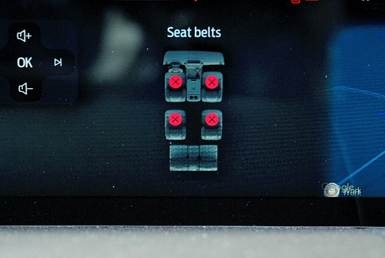
Key changes for the front seats include:
- Warning system now must cover both driver and front outboard passenger positions.
- A two-stage audible alert as laid out below:
- On ignition, if the belt is not fastened which lasts a minimum of 30 seconds.
- A second warning if the belt is unbuckled again once the vehicle reaches 10km/h (6.2mph).
Key changes for the rear seats include:
- A visual alert on startup showing which rear belts are unbuckled, lasting at least 60 seconds
- A combined audio and visual change of status warning if a rear seat belt is unbuckled while the vehicles is in forward or reverse gear.
Industry Impact and Future Considerations
The upcoming FMVSS 208 updates place greater emphasis on homologation and compliance, requiring manufacturers to validate performance through updated testing protocols. These changes add stricter performance criteria for occupant safety systems, which may mean extra validation and testing. While programs with advanced restraint technologies may adapt quickly, others could face longer timelines and higher costs. MGA is prepared to support these transitions with proven expertise and insight gained through close interaction with the NHTSA. Our approach delivers efficient testing solutions and early awareness of regulatory expectations to keep programs on schedule.
As these developments progress, stay connected with MGA Research for future updates on FMVSS and related safety standards. For more information or to request a quote, contact us today.

Ready to Get Started?
Let's discuss your testing needs and how MGA can help. Our team is ready to provide the expertise and solutions you're looking for.