
Introducing Temperature‑Conditioned Pyroshock Testing at MGA
Feb 26, 2026
MGA Research Corporation has long been at the forefront of developing advanced solutions to meet the evolving needs of the transportation industries. As space exploration increasingly extends beyond Earth’s orbit, test requirements have grown more complex and demanding. Not only does the vacuum level increase as spacecraft travel deeper into space, but temperatures also drop to new lows, particularly when conducting research on the dark side of the Moon.
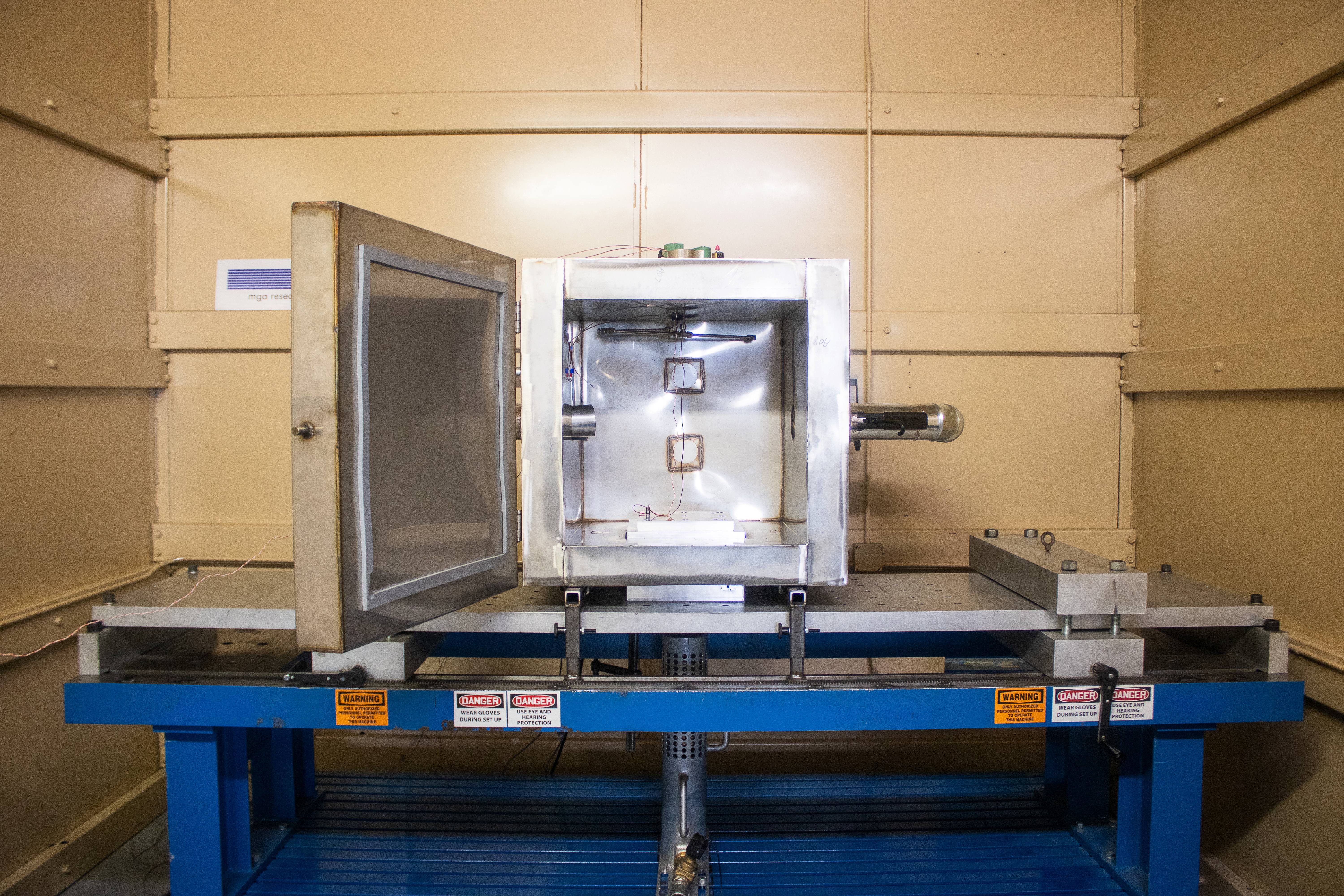
To address these emerging needs, MGA has developed an enhancement to its pyroshock testing infrastructure that enables pyroshock testing at controlled temperatures, including cryogenic conditions. This new capability, known as the Thermal Pyroshock Chamber (TPC), allows customers to more accurately replicate mission‑relevant environments during qualification and verification testing.
Pyroshock Testing Beyond Ambient Conditions
Traditional pyroshock testing is typically performed at ambient laboratory temperatures. However, many modern space missions involve shock events that occur in environments far removed from standard atmospheric conditions. Material properties, structural interfaces, and electronic performance can vary significantly at elevated or cryogenic temperatures, making ambient‑only testing insufficient for certain mission profiles.
As exploration missions push farther into deep space, the need to simulate combined environmental and mechanical stresses has become increasingly critical. Pyroshock events occurring outside Earth’s atmosphere, or on planetary surfaces such as the Moon, demand testing solutions capable of reproducing both thermal extremes and high‑frequency shock environments simultaneously. Astronauts aboard shuttles and spacecraft will be relying on electronics and life support systems that are experiencing these environments for the first time, making it necessary to enter the unknown with confidence that their equipment will perform flawlessly.
Download our TPC Equipment flyer for a summarized breakdown.
MGA’s Thermal Pyroshock Chamber (TPC)
To support testing under these conditions, MGA has developed the TPC, a temperature‑controlled enclosure designed to integrate directly with MGA’s Large Mass Pyroshock systems. The chamber enables units under test (UUTs) to be conditioned to hot or cryogenic temperatures and maintained at those conditions during pyroshock testing.
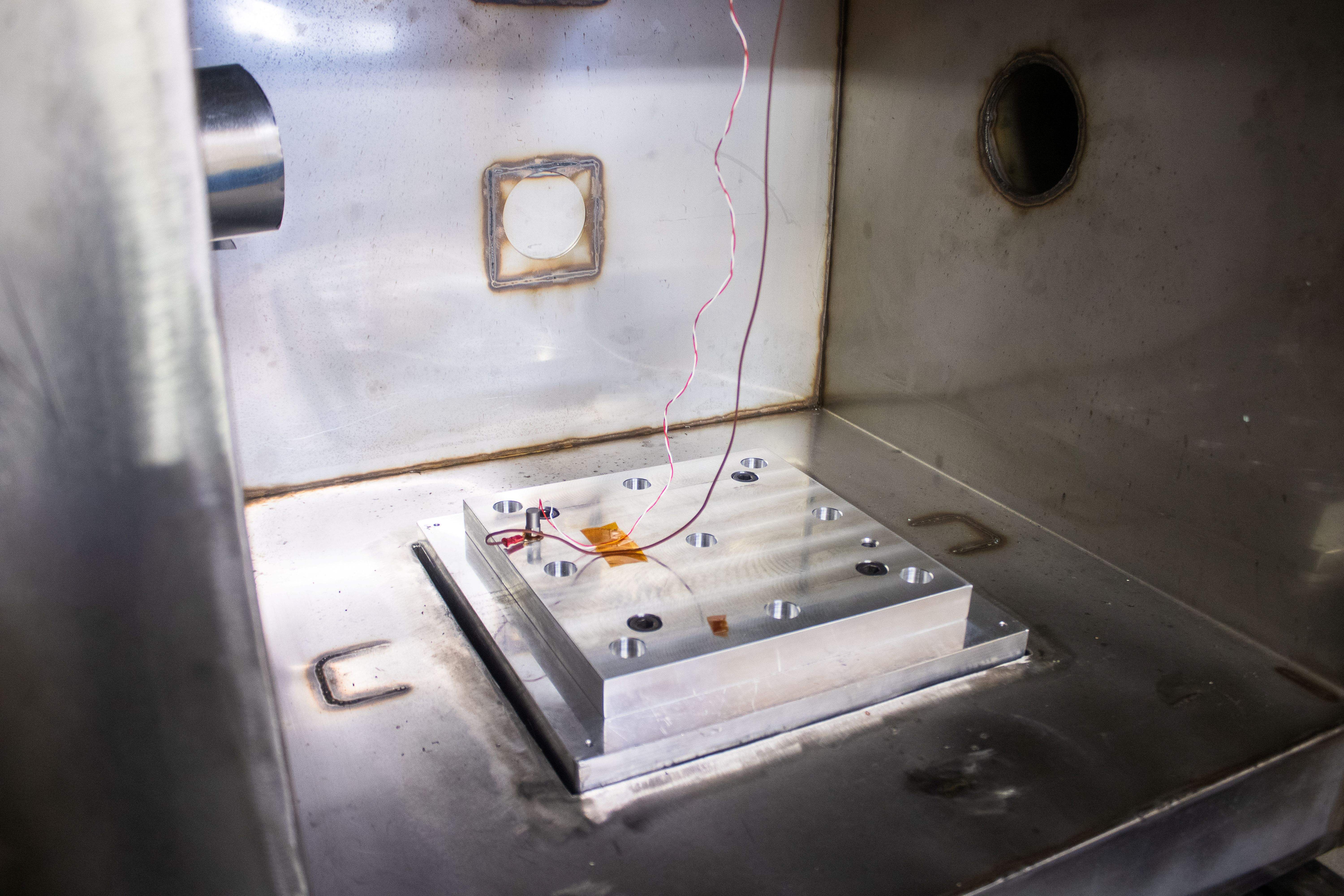
This internally developed system represents a significant expansion of MGA’s environmental testing capabilities and provides customers with a single, integrated platform for combined thermal and pyroshock qualification.
Integrated Thermal and Pyroshock Testing
The TPC is designed for seamless operation with MGA’s existing pyroshock infrastructure:
- The UUT is mounted inside the chamber, which is installed directly on the pyroshock table.
- The chamber and UUT are preconditioned to a controlled setpoint (hot or cold) via a Human Machine Interface (HMI).
- The pyroshock event is performed once the chamber stabilizes to the target temperature.
This integrated approach eliminates the need to transfer hardware between separate thermal and shock environments, reducing thermal losses, test complexity, and overall program risk.
Key Capabilities and Features
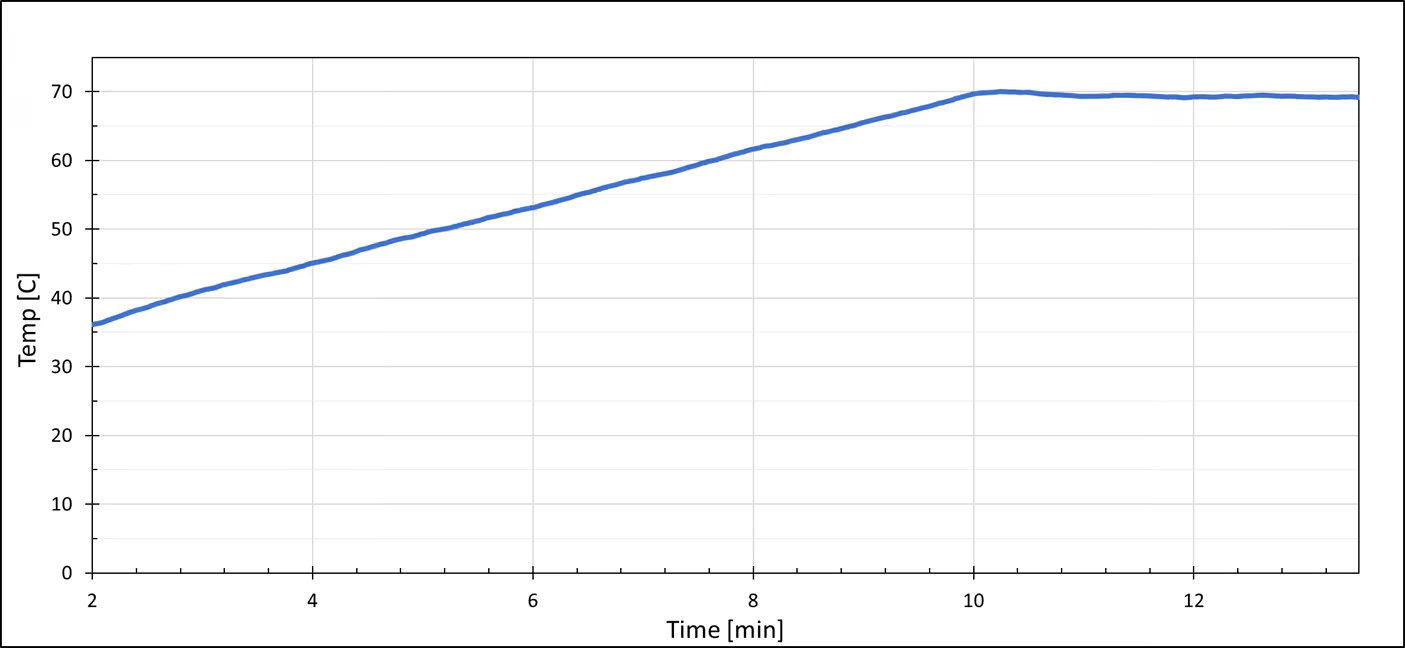
The TPC features a multi-wall insulated enclosure and uses both liquid and gaseous nitrogen as environmental control agents. Temperature control is managed digitally, allowing precise programming of high and low setpoints as well as customizable ramp rates to meet specific test requirements.
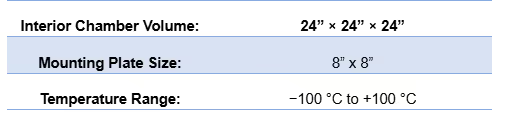
Heating is achieved using gaseous nitrogen, enabling chamber temperatures up to 100 °C. Cooling is accomplished via liquid nitrogen feed lines, allowing the system to reach cryogenic temperatures approaching 175 K (−100 °C).
The chamber is compatible with MGA Large Mass Pyroshock systems and includes multiple pass‑through ports. A top‑mounted port supports instrumentation such as accelerometer cabling and power connections, while a lower pass‑through accommodates a cube fixture that interfaces directly with the pyroshock beam. This fixture connects to MGA’s standard 4” × 4” bolt pattern beam and provides a mounting surface for test fixtures in all three orthogonal axes.
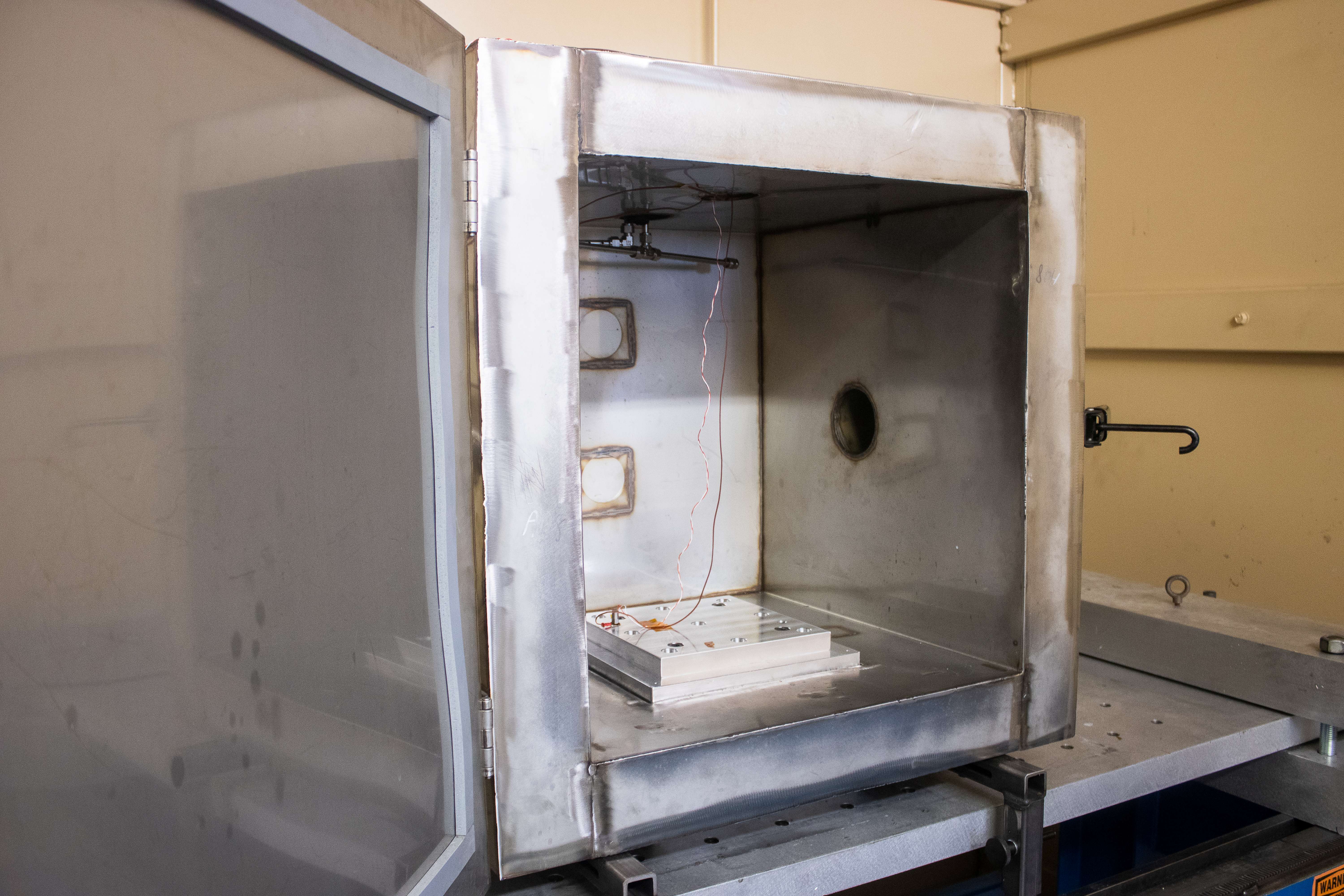
The TPC was developed internally at MGA’s fabrication center, located adjacent to the Testing Services Laboratory in Akron, NY. This close integration of design, fabrication, and testing between both MGA teams enabled collaborative development and direct communication throughout the development of the TPC.
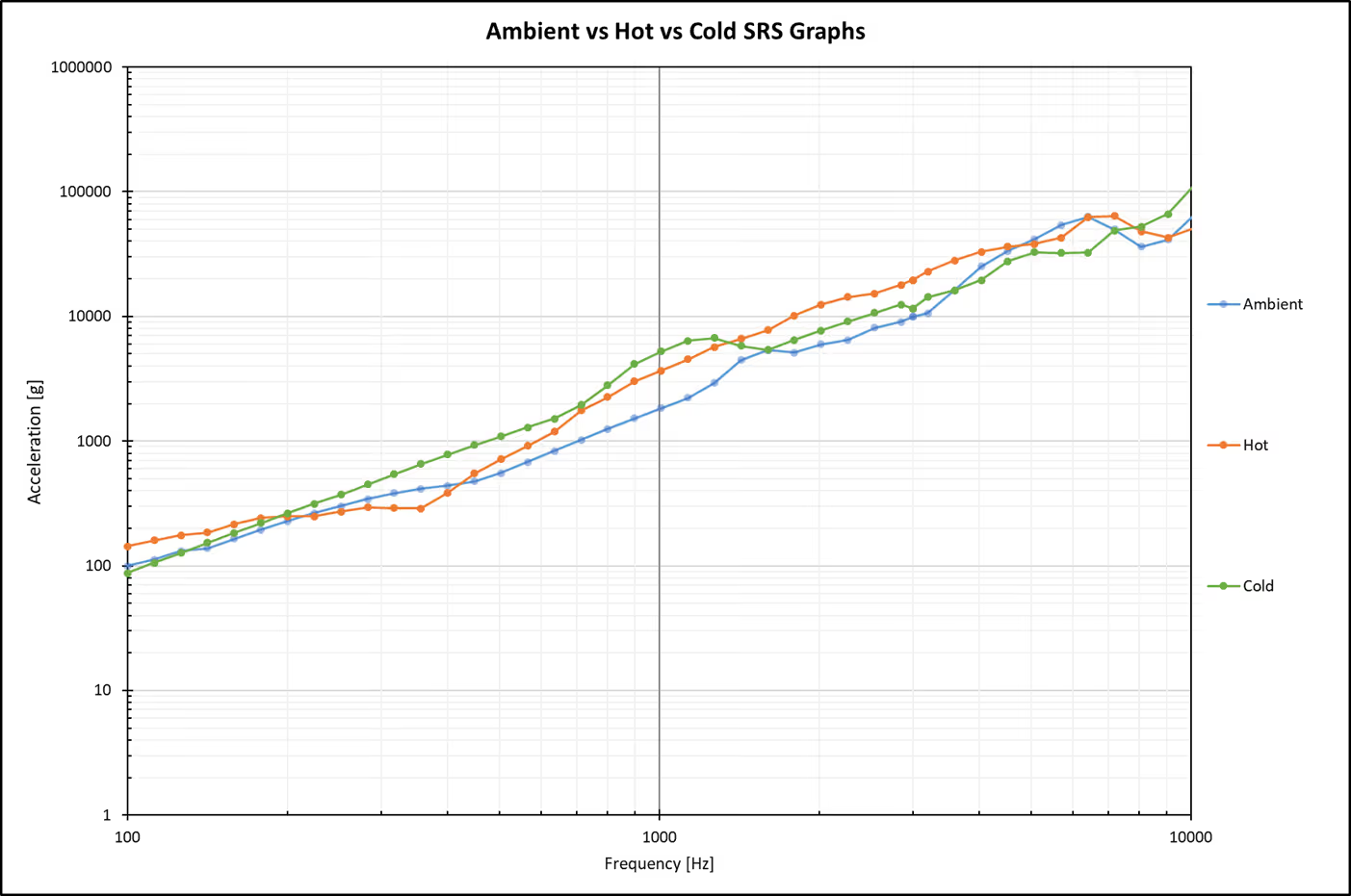
Extensive internal validation testing has confirmed that the shock response of MGA’s pyroshock system is equivalent across ambient, heated, and cryogenic conditions, ensuring that the performance of the test article can be equally compared across test temperatures.
Applications for the Pyroshock Testing at Temperature
Pyroshock testing at temperature provides a more representative assessment of hardware performance in mission‑realistic conditions. Cryogenic shock events are particularly relevant to space exploration scenarios, including lunar landers, multi‑stage propulsion systems, and stage-separation events beyond Earth’s atmosphere.
For example, lunar missions may experience pyroshock during ascent from the lunar surface or during orbital maneuvers following descent. Similarly, stage separation events en-route to the Moon or beyond can occur in cold vacuum environments. These conditions are expected for upcoming missions such as NASA’s Artemis program, which aims to return astronauts to the lunar surface for the first time since 1972.
By enabling pyroshock testing under both heated and cryogenic conditions, MGA’s TPC supports development and qualification efforts for:
- Spacecraft structures and subsystems
- Avionics and electronic assemblies
- Propulsion and stage‑separation hardware
- Hydraulic, gas handling, and life support systems
Looking Ahead
As the space industry continues to push the boundaries of what is possible, the demand for advanced, mission‑relevant testing solutions continues to increase. MGA remains committed to supporting these efforts through ongoing investment in test capabilities that meet the needs of current and future space programs. The TPC represents one of MGA’s latest contributions to enabling reliable pyroshock simulation under extreme thermal conditions.
We are committed to investing significantly in the future of space exploration, while offering our clients the most advanced testing solutions available. If you are interested in learning more about our space and defense capabilities, fill out our contact form today!
Ready to Get Started?
Let's discuss your testing needs and how MGA can help. Our team is ready to provide the expertise and solutions you're looking for.