
Force Application Devices (FADs) for Repeatable and Accurate FMVSS 210 Testing
Jun 30, 2026
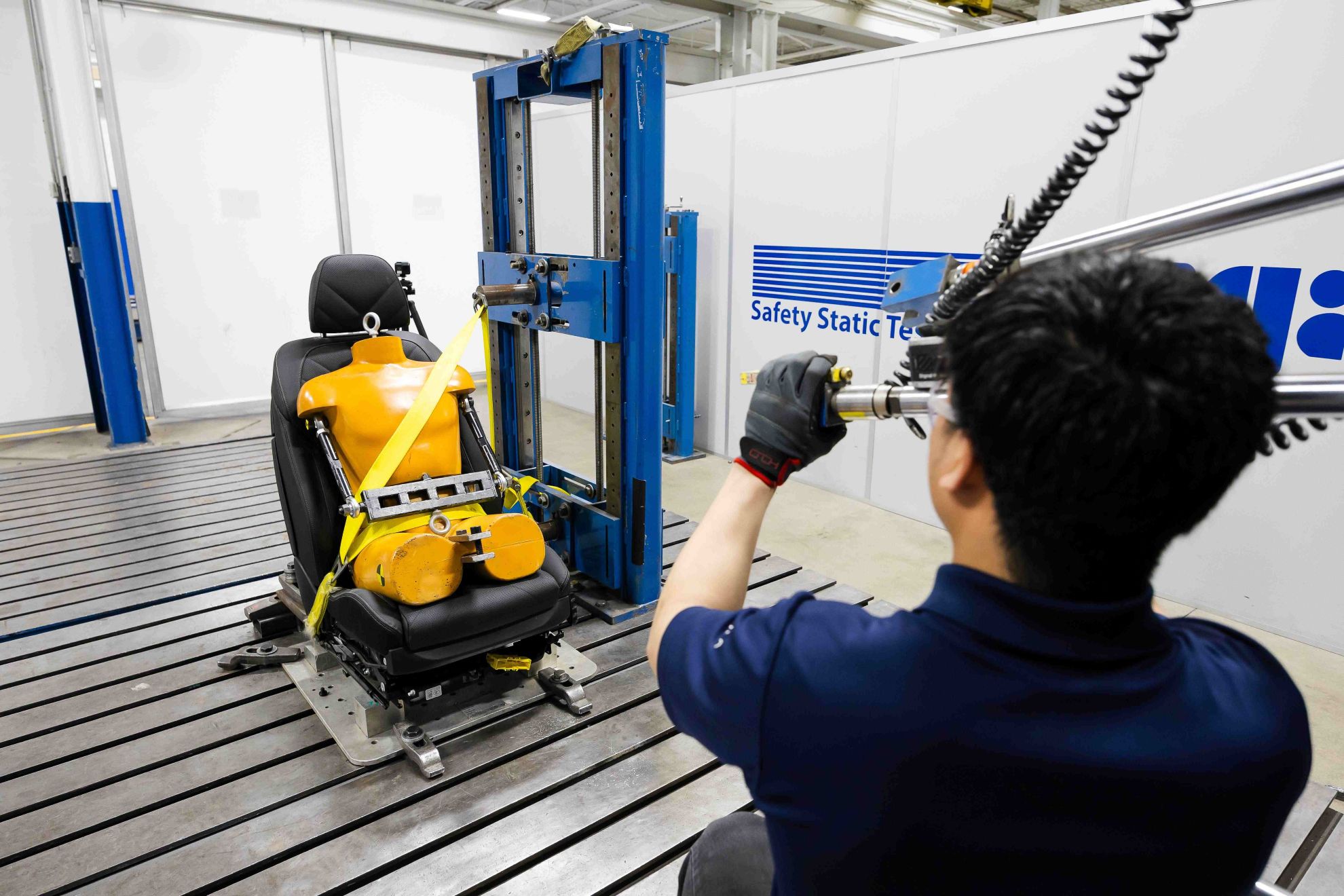
One of the most notable changes in NHTSA's updated FMVSS 210 regulation is the introduction of new test setup methods. Manufacturers now have the option to utilize the Body Block Zone Determination method or adopt the Force Application Device (FAD) approach, which may eliminate the need for traditional body blocks entirely. It is important to note that manufacturers must select their compliance method at the time of vehicle certification and may not change methods once the vehicle is in production.
In this article, we will dive into recent updates regarding these changes and how MGA can better support your upcoming FMVSS 210 needs.
MGA’s Leadership in FMVSS 210 Testing
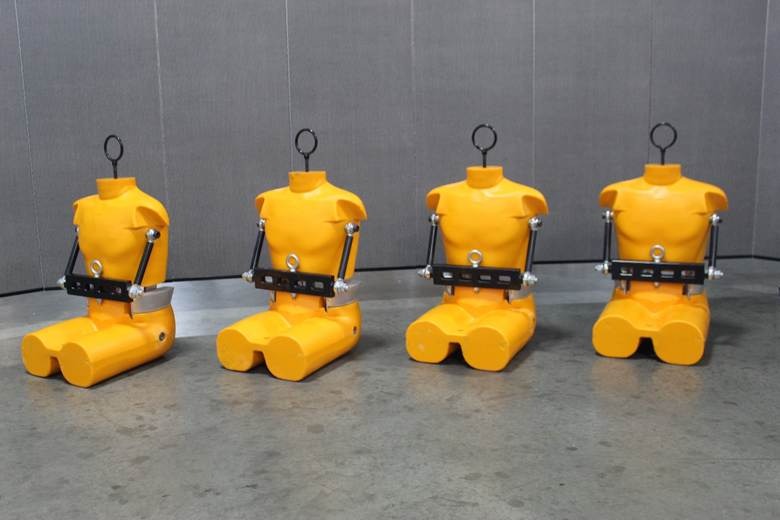
Since the start of development and subsequent release of the updated FMVSS 210 final rule, MGA has been at the forefront of implementing and refining both compliance methods. Our team has developed in-house capabilities, tooling, and processes to support both traditional and advanced testing approaches.
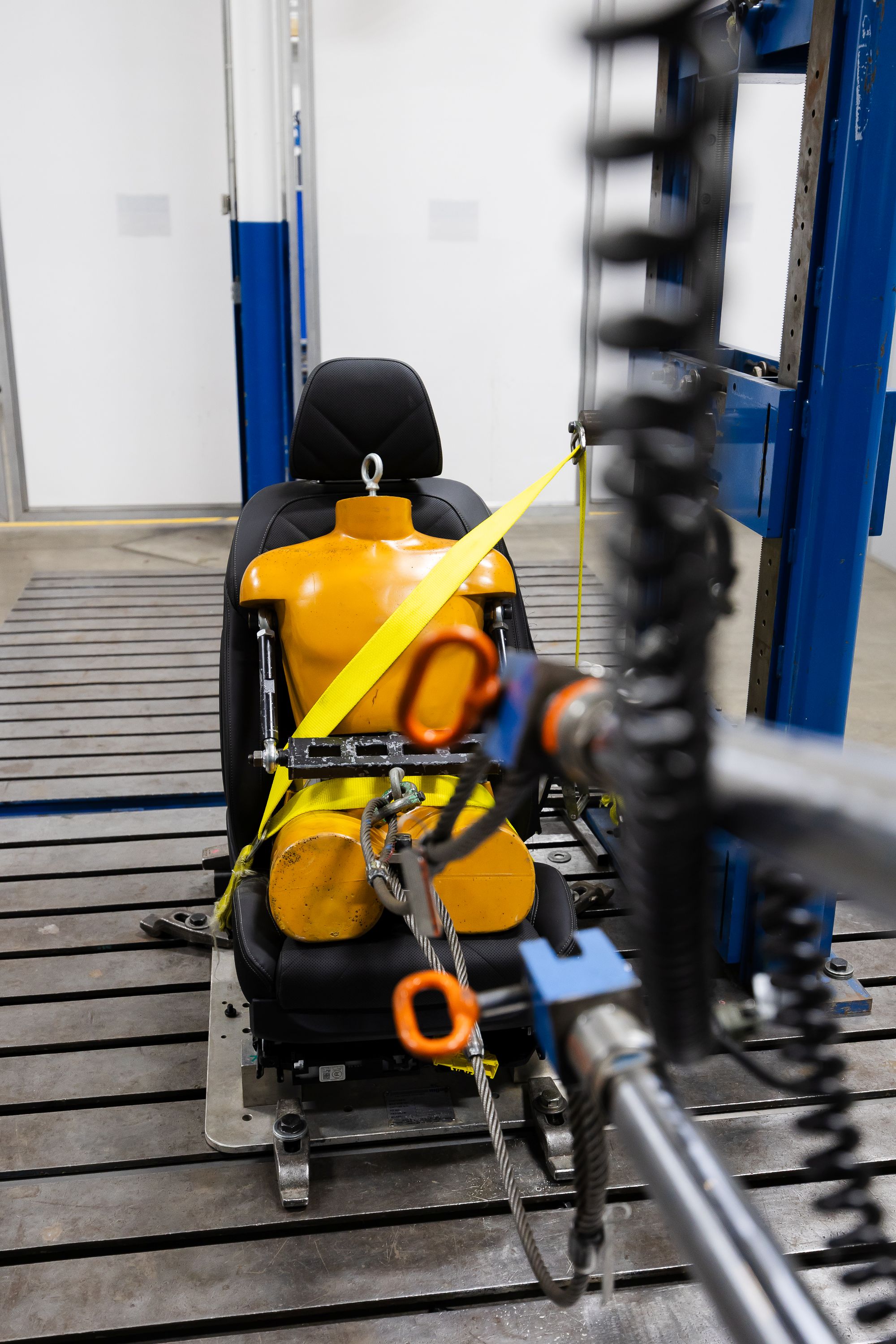
Our equipment and fabrication team has designed and developed both FAD1 and FAD2 devices for internal testing and customer use. FAD1 is the larger version of the force application device, while FAD2 is the smaller variant. To date, we have supplied over 100 FAD units to customers and continue to support increasing industry demand as manufacturers prepare for compliance.
Through extensive testing and real-world application, MGA has established best practices for both the Body Block Zone Determination method and FAD-based testing, ensuring accurate, repeatable, and consistent results.
Learn more about our FADs here.
Body Block Zone Determination Testing
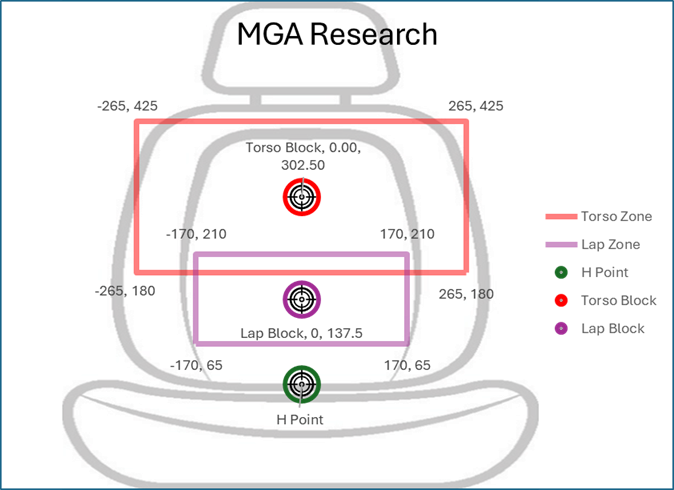
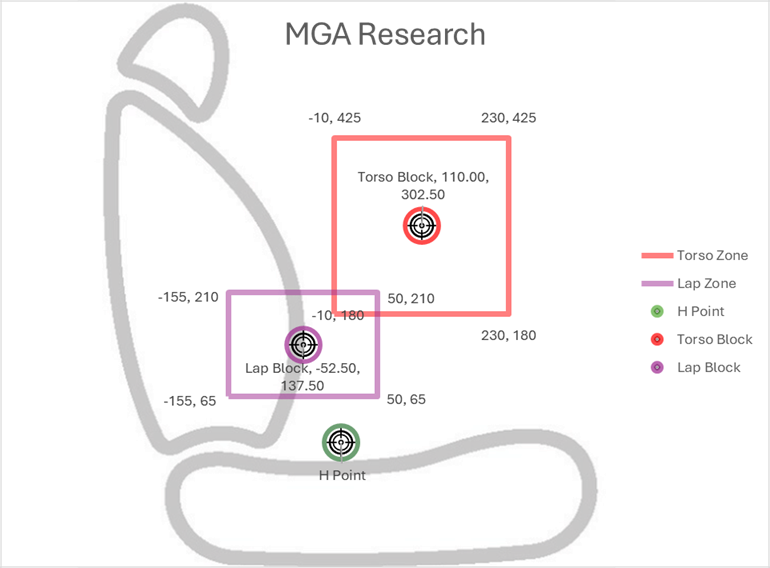
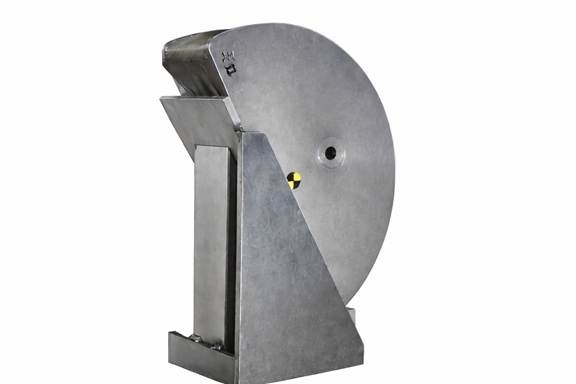
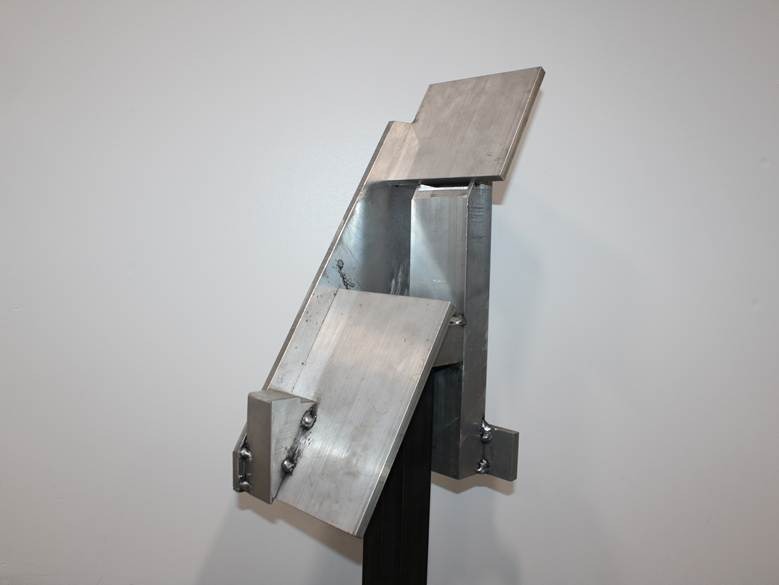
MGA has significant experience executing the Body Block Zone Determination method in accordance with the updated standard. The images below are our proprietary verification tool used to confirm the body block positioning within the defined zones relative to the Seating Reference Point (SgRP). Our approach focuses on precision, verification, and repeatability:
- Utilization of standard body blocks in accordance with FMVSS 210 requirements
- Use of MGA’s body block positioning aid device to support the torso block placement.
- Integration of Coordinate Measuring Machine (CMM) systems to capture body block position at pre-load
- Validation of setup prior to load application to ensure compliance with regulatory requirements
FAD1 & FAD2 Testing
MGA also provides full support for testing using the new Force Application Device (FAD) methodology, including both FAD1 and FAD2 configurations:
- Use of MGA-developed FAD1 and FAD2 devices for force application
- Verification that FAD devices are properly centered, parallel to, and within 10 mm of the seat reference plane
- Confirmation that the torso portion of the FAD maintains proper contact with the seat back
- Evaluation of potential interference between adjacent FAD1 devices
- Application of substitution criteria per S5.4(1) when FAD interference prevents proper positioning
MGA Equipment: FAD1 & FAD2
MGA offers FAD1 and FAD2 devices for purchase, backed by a proven track record in development and utilization. To date, our team has produced 75 FAD1 units, along with 50 FAD2 units, as well as 17 carts. Every FAD unit undergoes rigorous validation prior to release, including load testing to 20 kN on both the lap and torso, ensuring reliable performance under demanding conditions. With decades of hands-on experience in prototype development and testing, MGA is a trusted leader in the design and application of the FAD devices. We go beyond simply supplying equipment by supporting our customers with technical guidance, training, and comprehensive in-house testing services. Our team is ready to support the integration of FAD devices into your internal testing programs, providing expert insight, training, and practical recommendations to ensure proper application, maintenance, and dependable performance.
Supporting the Transition to the New Standard
As the industry transitions toward the updated FMVSS 210 requirements, MGA remains committed to supporting our customers through every stage of implementation. Whether utilizing traditional body block methods or transitioning to FAD-based testing, our team provides the expertise, equipment, and guidance necessary to ensure compliance and confidence in test results.
For more information on our FMVSS 210 testing capabilities or if interested in purchasing FAD devices, please contact our team.
Frequently Asked Questions About FMVSS 210 Testing and FADs
What changed in the updated FMVSS 210 seat belt anchorage regulation?
The updated FMVSS 210 rule introduces new testing setup options, allowing manufacturers to choose between the Body Block Zone Determination method or the Force Application Device (FAD) approach. The rule was published on September 17, 2024, and became effective on October 17, 2024. For vehicles weighing less than or equal to 4,536 kg (10,000 pounds), the compliance date is September 1, 2027. For vehicles weighing greater than 4,536 kg (10,000 pounds), the compliance date is September 1, 2030. The compliance date for multi-stage manufacturers and alterers of vehicles less than or equal to 4,536 kg (10,000 pounds) is September 1, 2028.
How is a Force Application Device (FAD) used in FMVSS 210 testing?
A Force Application Device (FAD) is used to apply the loads to seat belt anchorage systems during FMVSS 210 testing. The FAD method provides a repeatable and accurate alternative to traditional body block setups and may eliminate the need for body blocks entirely.
What is the difference between FAD1 and FAD2?
FAD1 is the larger version of the force application device, while FAD2 is the smaller variant. Both are designed to meet updated FMVSS 210 testing requirements and can be used depending on seat geometry, packaging constraints, and test setup considerations.
Can manufacturers switch between Body Block and FAD testing methods?
No. Manufacturers must select their compliance method at the time of vehicle certification and cannot change methods once the vehicle is in production.
How is body block positioning verified during FMVSS 210 testing?
Body block positioning is verified using tools that confirm placement within defined zones relative to the Seating Reference Point (SgRP). Coordinate Measuring Machine (CMM) systems are used to capture body block position at pre-load and validate setup before load application.
What setup requirements must be met when using FAD devices?
When using FAD devices, the setup must ensure:
• The device is centered and parallel to the seat reference plane
• The FAD is within 10 mm of the seat reference plane
• Proper contact is maintained between the torso portion and seat back
• Adjacent FAD interference is evaluated and addressed if necessary
What happens if multiple FAD devices interfere with each other?
If adjacent FAD1 devices interfere and prevent proper positioning, substitution criteria outlined in S5.4(1) can be applied to ensure compliance with the standard.
How are FAD devices validated before use?
Each FAD unit undergoes rigorous validation, including load testing to 20 kN on both the lap and torso portions, to ensure reliable and repeatable performance during testing.
Can FAD devices be purchased for internal testing programs?
Yes. FAD1 and FAD2 devices are available for purchase and are supported with technical guidance, training, and recommendations for integration into internal FMVSS 210 testing programs.
What are the benefits of using FADs for FMVSS 210 testing?
Using FADs helps improve repeatability, reduce setup variability, streamline test preparation, and support compliance with the updated FMVSS 210 requirements.
When does the updated FMVSS 210 rule take effect?
The compliance date for the updated FMVSS 210 regulation is September 1, 2027, though manufacturers may choose to comply earlier.

Ready to Get Started?
Let's discuss your testing needs and how MGA can help. Our team is ready to provide the expertise and solutions you're looking for.