
Environmental Conditioning for Pedestrian and Impact Testing: Validating Safety Performance Across Extreme Temperatures
Aug 18, 2026
Vehicle safety systems are expected to perform reliably across a wide range of environmental conditions, from sub-zero winter mornings to prolonged exposure to extreme heat. While many impact tests are conducted at ambient laboratory conditions, real-world pedestrian and other impact scenarios often occur far outside those controlled environments. Environmental impact testing bridges this gap by evaluating pedestrian protection and sensing systems under extreme temperatures that more closely reflect global operating conditions.
This article explores the importance of environmental conditioning for pedestrian and impact testing, how materials and safety systems respond to extreme temperatures, and how MGA helps customers overcome the challenges associated with environmentally conditioned testing.
Why Environmental Conditioning Matters
Materials, structures, and electronic systems do not respond uniformly across temperature ranges. Plastics, foams, adhesives, and energy-absorbing components can stiffen, soften, or become brittle depending on environmental exposure. Likewise, pedestrian sensing and active safety systems must detect, interpret, and respond correctly regardless of the climate.
Testing exclusively at room temperature can mask temperature-sensitive behaviors that emerge only under cold or hot conditions. Environmental conditioning helps identify these risks early, supporting robust vehicle designs and reducing the likelihood of late-stage program changes.
Temperature Effects on Pedestrian Protection Performance
Temperature-related changes can influence:
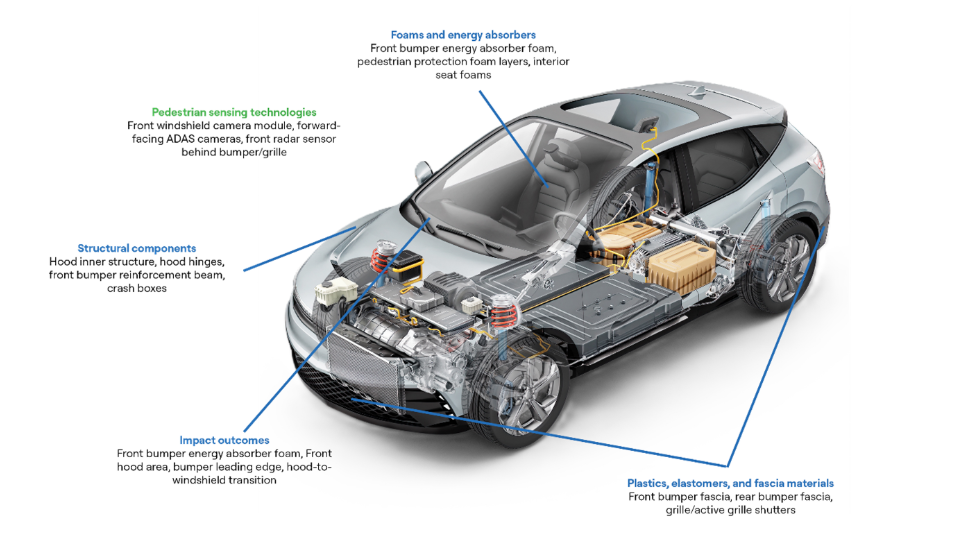
- Plastics, elastomers, and fascia materials, which may become brittle or crack when cold-conditioned.
- Foams and energy absorbers which can lose efficiency or permanently deform at elevated temperatures.
- Structural components, including hood assemblies, bumper systems, and lower extremity protection zones, where changes in stiffness can alter load paths and energy distribution.
- Impact outcomes, including impact duration, peak loads, and injury criteria values such as HIC and legform measurements.
- Pedestrian sensing technologies, where cameras, radar, and electronic control systems must maintain reliable detection and response across a wide range of operating temperatures.
What is Environmental Impact Testing?
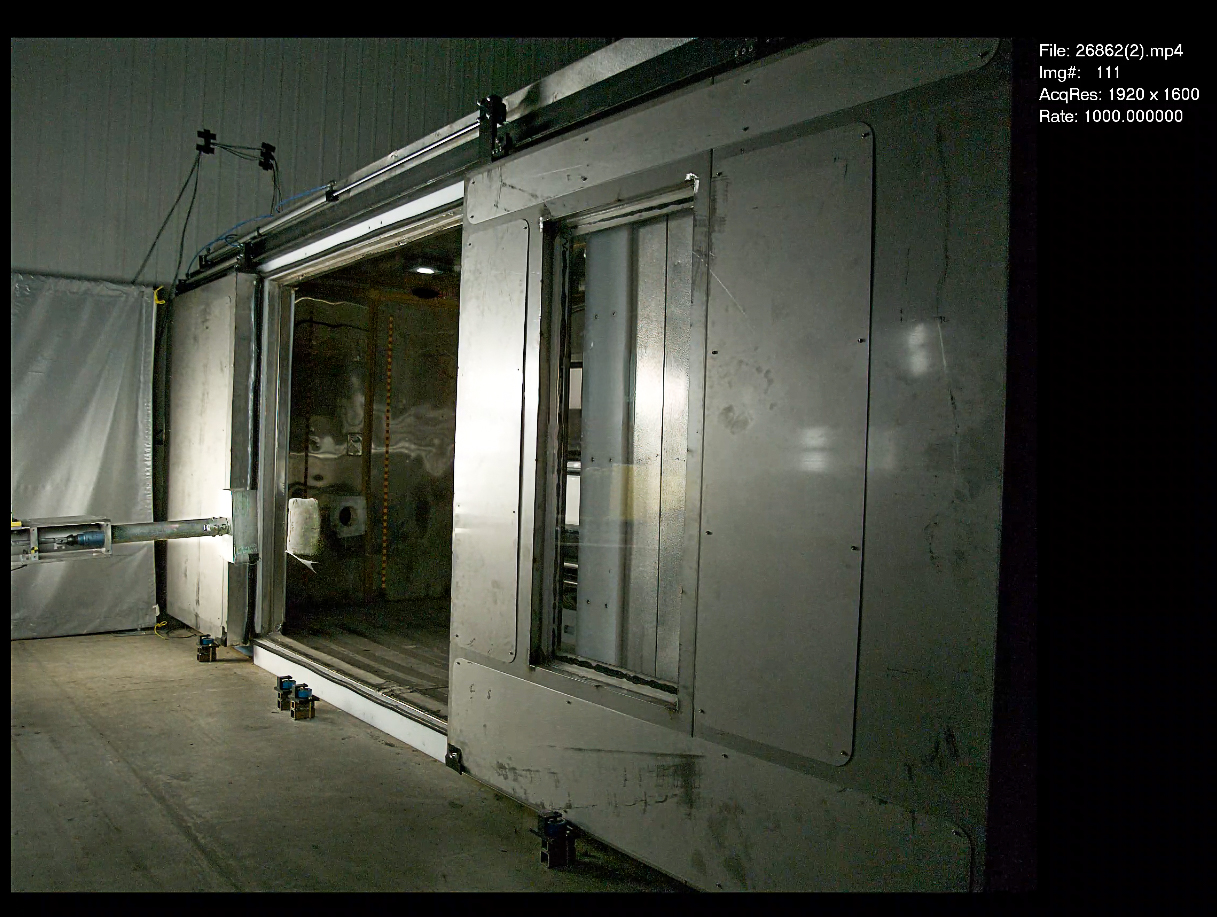
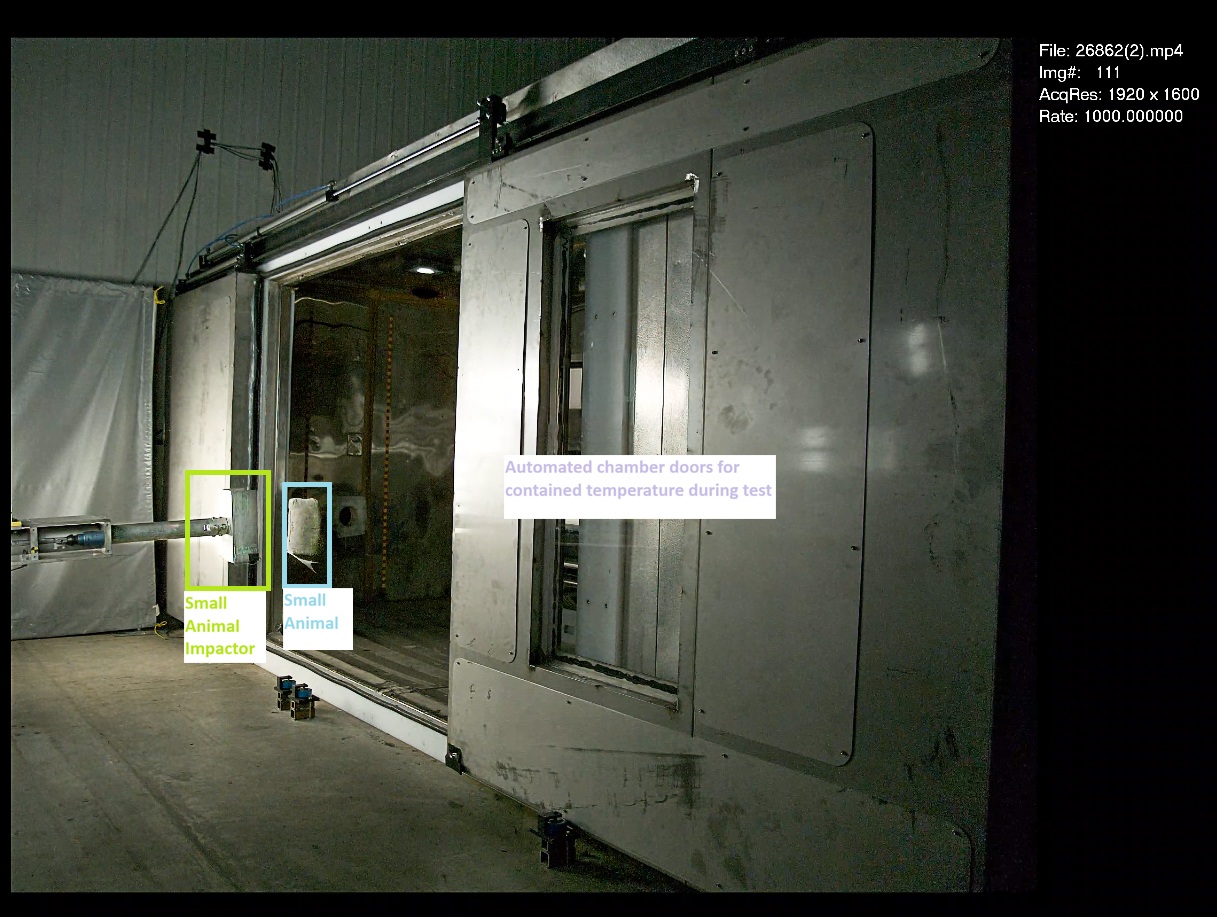
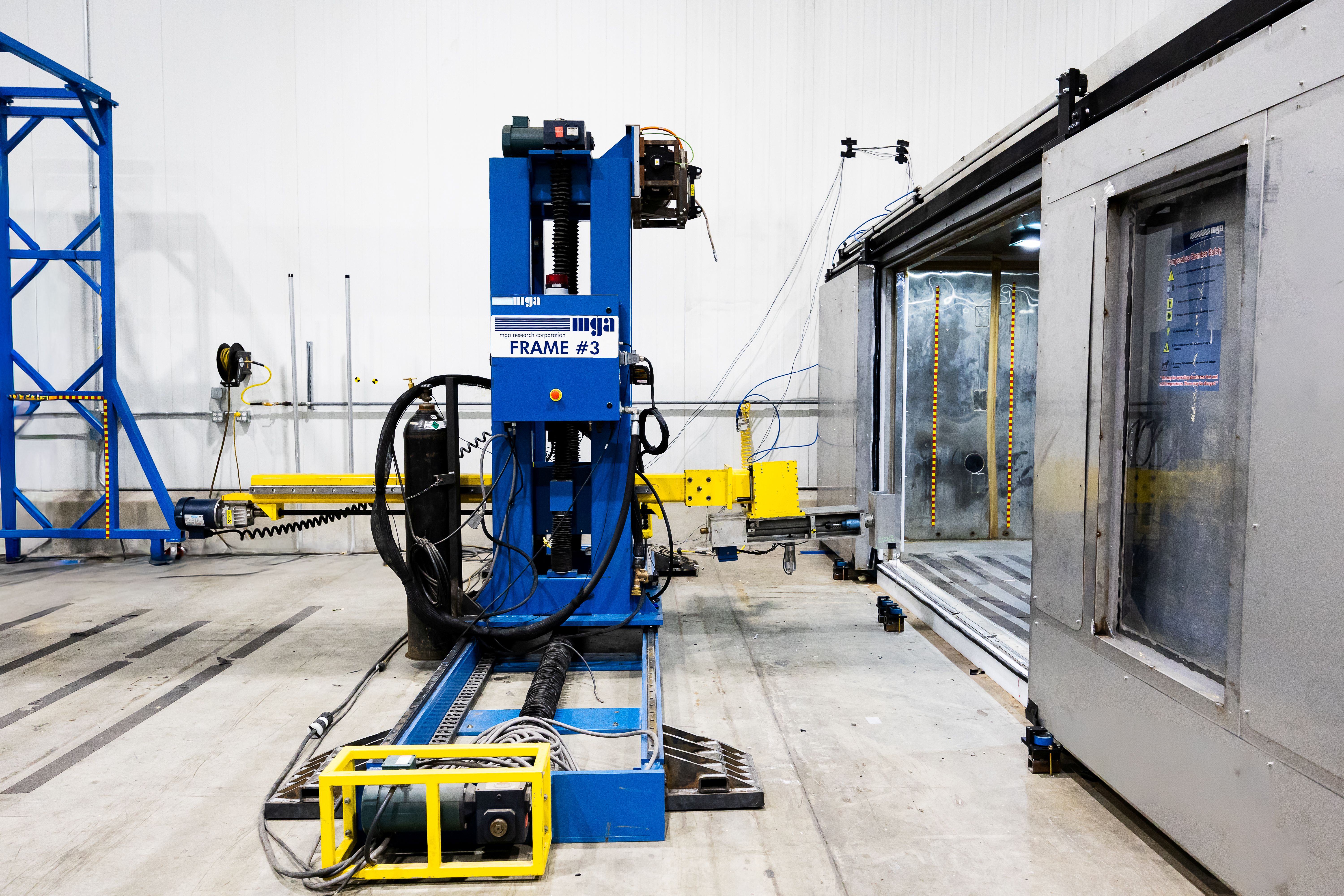
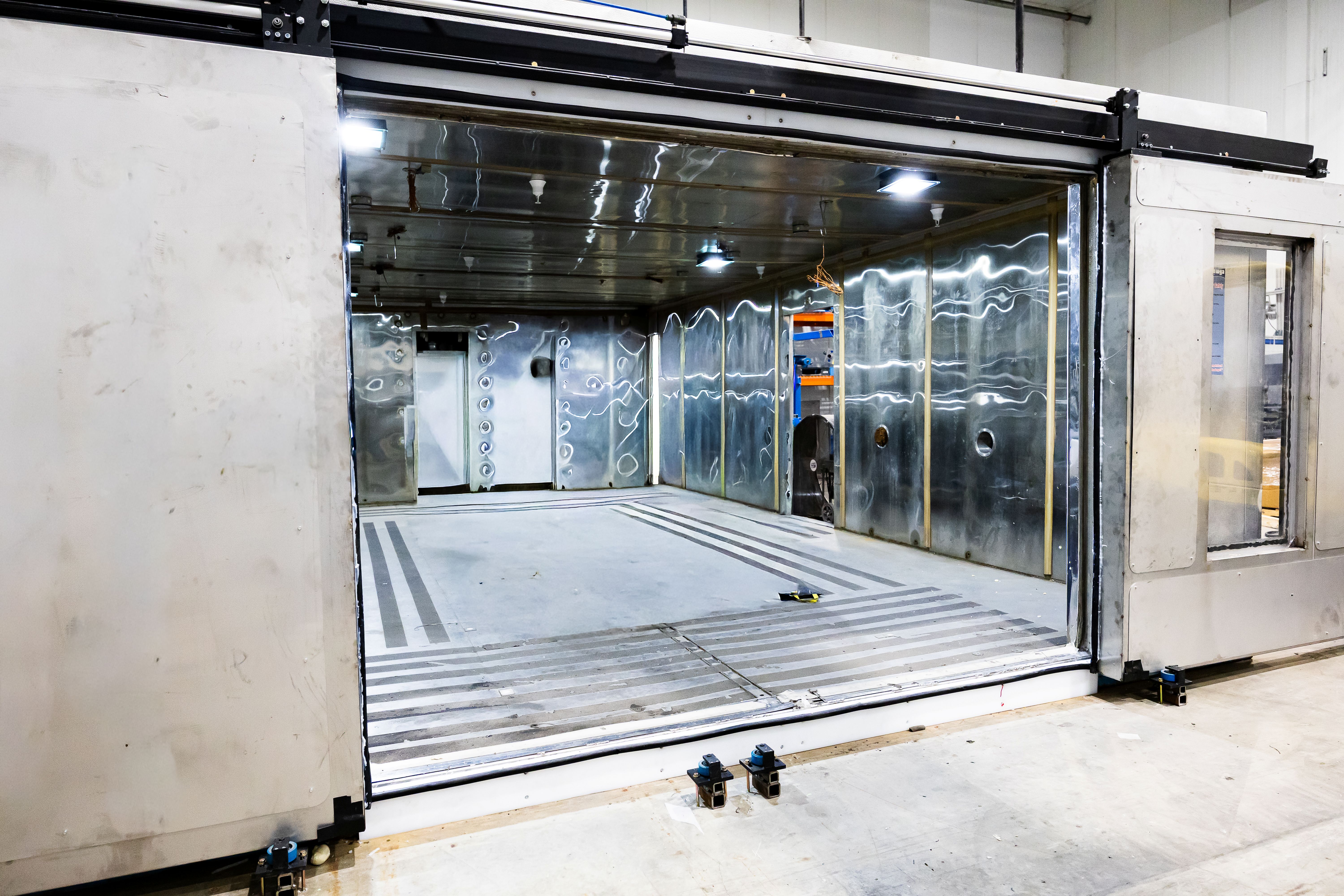
Environmental impact testing combines traditional pedestrian or impact testing with controlled thermal conditioning. Components or complete vehicles are conditioned in an environmental chamber to a defined temperature and soak duration prior to testing, or the impact event itself is performed directly within the environmental chamber while keeping the impact system outside the chamber.
Typical conditioning parameters may include:
- Below freezing conditions
- Elevated high-temperature exposure
- Thermal soak to ensure temperature stabilization
- Controlled transitions between ambient and extreme environments
This approach allows engineers to assess impact performance under conditions that more closely represent real-world vehicle use.
Industry Challenges and MGA Solutions
Environmental impact testing requires more than simply placing a vehicle or component in an environmental chamber. Successfully executing these tests requires careful planning, specialized equipment, and experienced personnel to maintain test integrity while working under extreme temperature conditions.
At MGA, our environmental impact testing capabilities are designed to deliver accurate, repeatable results while minimizing variability introduced by the test environment. Our facilities support testing individual components, subassemblies, and complete vehicles across a wide range of customer-defined impact scenarios and environmental conditions.
Our engineers have extensive experience supporting pedestrian protection testing, pedestrian sensing validation, interior and exterior component impact testing, and custom validation programs developed to customer-specific specifications under both ambient and environmentally conditioned test environments.
MGA supports the industry by:
- Conducting impact events utilizing our 3-axis frame while maintaining controlled thermal conditions throughout the test
- Integrating instrumentation, data acquisition systems, and high-speed imaging for reliable performance in extreme temperatures
- Managing condensation, icing, and thermal stabilization to reduce environmental effects on test results
- Developing repeatable test procedures that produce consistent, high-quality data across multiple test series
- Supporting both traditional pedestrian impact testing and advanced pedestrian sensing validation under environmental conditions
By combining environmental conditioning with decades of impact testing experience, MGA performs testing that provides the data customers need to identify temperature-sensitive design issues early and validate vehicle performance with confidence before regulatory or consumer testing.
Engineering Confidence Beyond Ambient Conditions
Environmental conditioning provides critical insight into how vehicle energy-absorbing structures, pedestrian protection and sensing technologies, and interior and exterior impact structures respond across the full range of real-world operating temperatures. Evaluating these systems under hot and cold environmental conditions helps manufacturers identify temperature-sensitive behaviors early in development, resulting in more robust vehicle designs and greater confidence in overall safety performance.
At MGA, our experienced engineering team combines advanced environmental conditioning capabilities with decades of impact testing expertise to provide data that supports vehicle development from early design validation through regulatory compliance.
Whether validating pedestrian headform and legform impacts, evaluating pedestrian sensing technologies, or conducting specialized interior, exterior, and customer-specific component impact testing, MGA delivers the technical expertise and testing capabilities needed to help customers develop safer vehicles for drivers and vulnerable road users worldwide.
Ready to Get Started?
Let's discuss your testing needs and how MGA can help. Our team is ready to provide the expertise and solutions you're looking for.