
EV Battery Shock Testing: Validating Safety and Performance Under Real-World Impact Conditions
Jul 28, 2026

The challenge to deliver extended travel ranges has led to a continuous evolution of electric vehicles and most notably the battery systems. Developing systems with increased energy density while also reducing weight addresses this challenge, but the need to also improve and maintain safety is critical.
Potholes, curb impacts, and crash events are all real-world examples that can affect the structural integrity and long-term durability of electric vehicle battery packs. As a result, shock testing is a critical component of early battery pack development.
Why Shock Testing Matters
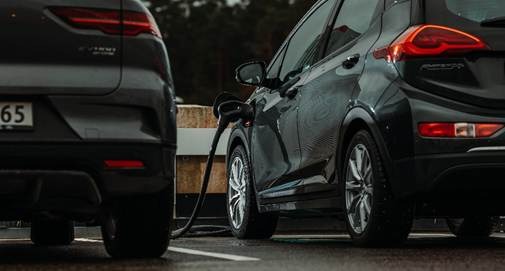
EV battery packs are one of the most valuable and safety-critical components of the vehicle. A significant impact event can place enormous stress on battery cells, electrical connections, cooling systems, and structural mounting features.
Without proper testing, these shock events can lead to:
- Structural damage to battery enclosures
- Broken or weakened electrical connections
- Reduced performance and durability
- Safety concerns such as fire or gas venting
By replicating real-world impact conditions in a controlled laboratory environment, manufacturers can identify potential weaknesses early in the design process and gain confidence in the future performance of their battery systems.
Replicating Real-World Impact Events using MGA’s Battery Impact Testing Equipment
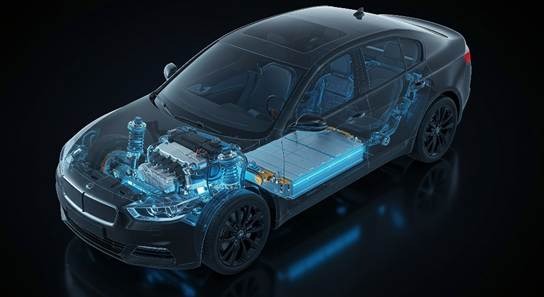
Effective shock testing requires a test environment that accurately reproduces the impact conditions defined by the customer or test specification requested. This includes designed and fabricated test fixtures which replicate the in-vehicle mounting characteristics, and equipment to precisely mimic the acceleration pulse needed.
Due to the large size of EV batteries, both in footprint and mass, more specialized equipment is needed in order to produce the shock pulses required. Traditional shock testing is performed on electro-dynamic vibration systems and pneumatic shock towers, but these are both greatly limited due to travel and force capacity.
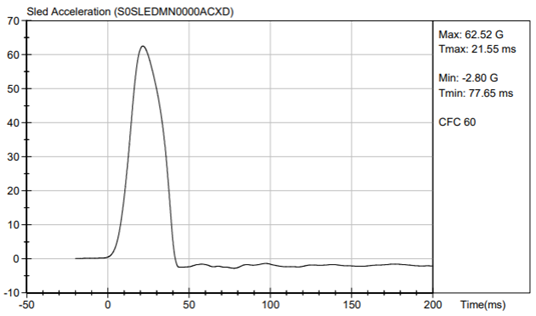
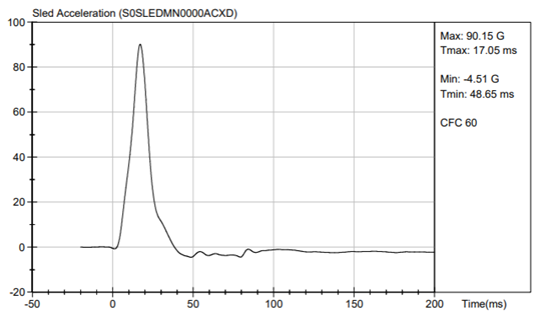
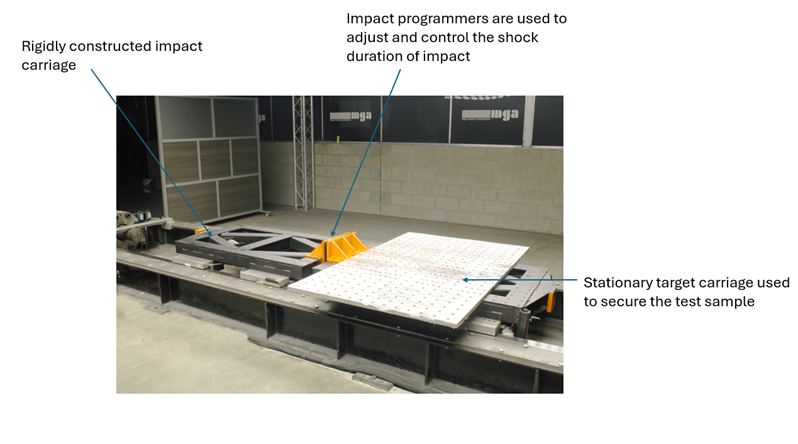
Using our proven Impact Sled System, we can generate high-G, short-duration half-sine shock pulses that accurately replicate severe impact events. For very short (<30 msec) pulses, MGA has developed a highly focused impact carriage to meet this requirement. The system accelerates a launch carriage into a target carriage that holds the test sample in the desired acceleration orientation, producing the shock pulse while maintaining precise control over test parameters.

System Specifications
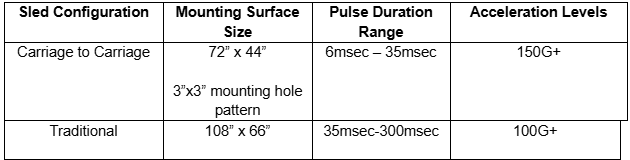
MGA's Impact Sled System offers the capacity and flexibility required for today's large-format battery systems:
Comprehensive Data Acquisition and Analysis
To understand the results of the shock testing, collecting accurate data properly is just as important as generating the shock event itself. MGA has the capability to collect a wide range of data such as temperature and enclosure strain in addition to the acceleration data commonly recorded during shock based testing.
Combined with high-speed video and CAN data recording, these measurements provide detailed insight into battery behavior during testing, helping engineers evaluate structural performance and identify areas for improvement.
Partnering for Battery Validation Success
The rapid advancement of electric vehicle technology continues to raise the bar for battery performance and safety. Manufacturers require partners capable of delivering accurate, repeatable, and efficient testing solutions that support accelerated product development.
Backed by decades of experience operating accelerator sled systems, MGA provides the expertise, equipment, and confidence customers need to validate battery packs and modules under demanding impact conditions.
Contact MGA Research today to learn more about our battery shock testing capabilities and services.
Ready to Get Started?
Let's discuss your testing needs and how MGA can help. Our team is ready to provide the expertise and solutions you're looking for.